Ambassador Animals

Welcome, Twizzler!

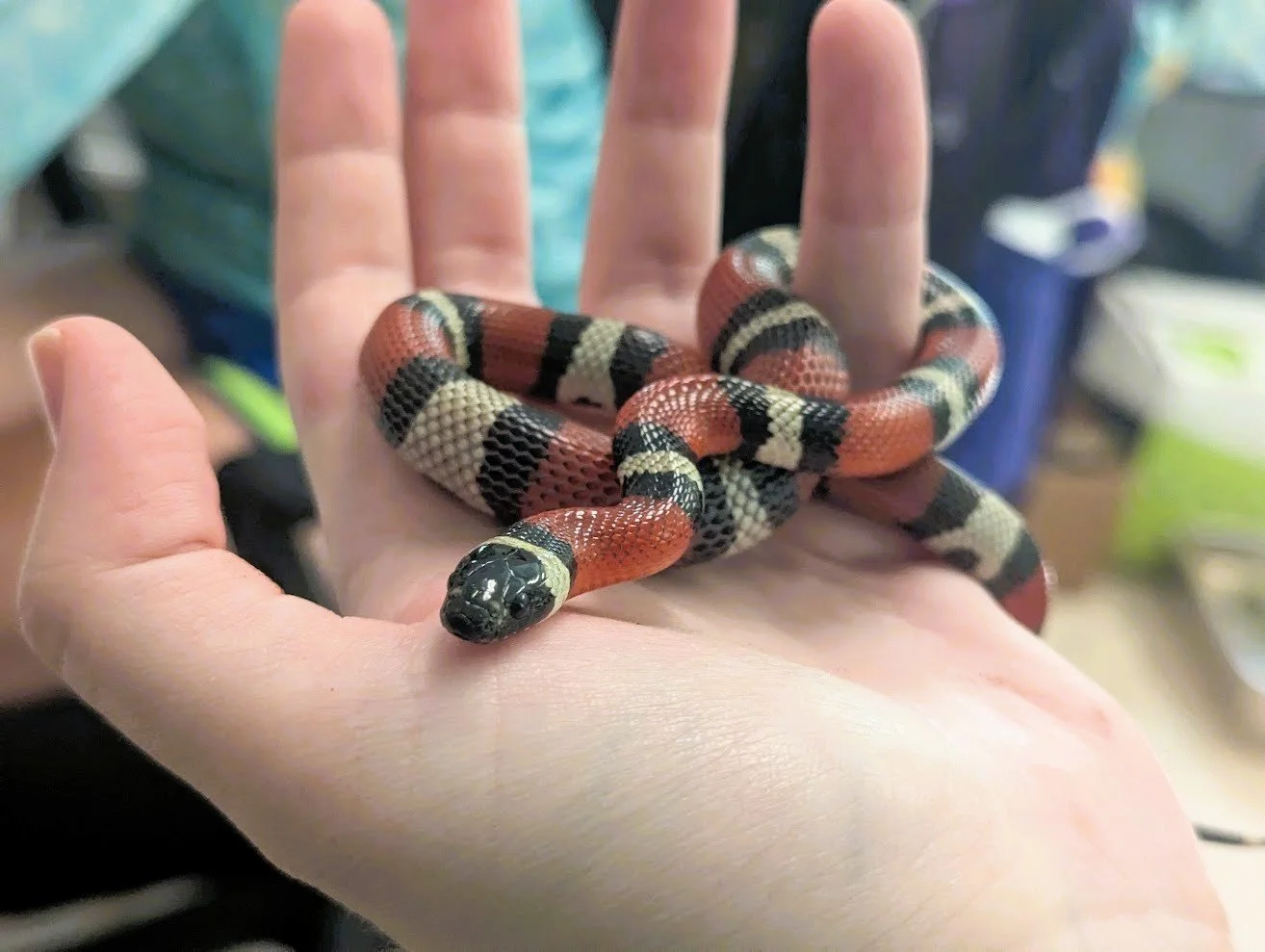
We're excited to welcome another friend to Piedmont Wildlife Center! Twizzler, our Coastal Plains Milksnake, joins us after being unable to find a home at a local pet store. While he is still very small, Twizzler has a big personality! He is full of energy and loves exploring his enclosure as he settles into his new home. 

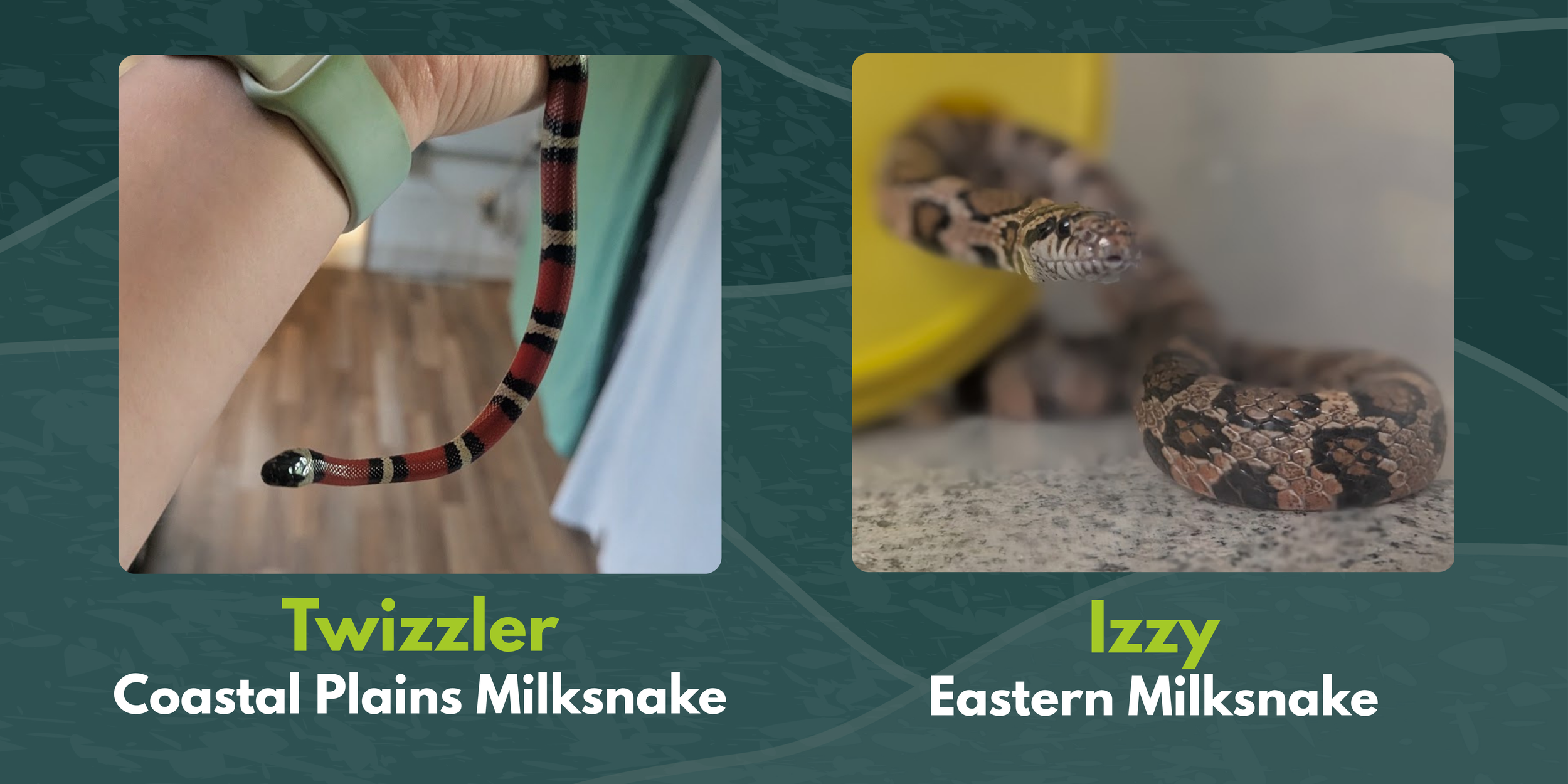
Twizzler is one of six Snake Ambassadors, including Izzy, our Eastern Milksnake. Although they're both milksnakes, they look quite different. Izzy has tan and brown markings with more muted colors, while Twizzler has bright red, black, and white bands. Both snakes are on the smaller side, with most milksnakes growing to be only 14 to 36 inches long.

Milksnakes have one of the widest ranges of any snake species in North America. They can be found from southern Canada all the way to Venezuela! There are as many as 24 milksnake subspecies, each living in a variety of habitats and sporting their own unique colors and patterns.
Speaking of, Twizzler's bright colors aren't just beautiful—they also keep him safe! Coastal Plains Milksnakes have bold red, black, and white bands that resemble the venomous Eastern Coral Snake. This is an example of mimicry, where one harmless animal resembles a dangerous one to scare away predators. You may have heard the rhyme, "Red touching black, friend of Jack. Red touching yellow can kill a fellow." While this rhyme can sometimes help identify snakes in parts of the southeastern United States, it isn't reliable everywhere. The safest thing to do is always admire wild snakes from a distance and never try to handle them.

Like all snakes, Twizzler uses his forked tongue to "smell" the world around him. Every time he flicks his tongue, he collects tiny scent particles from the air and ground. He then brings those scents to a special organ in the roof of his mouth, helping him find food and learn about his surroundings. If you meet him, you may even catch him flicking his tongue as he explores!

Despite being a milksnake, Twizzler doesn't drink milk! The name "milksnake" comes from an old wives' tale that these snakes sneak into barns at night to steal milk from cows. In reality, milksnakes visit barns because they're looking for prey like mice and rats. As carnivores and non-venomous constrictors, they help keep rodent populations under control. Here at Piedmont Wildlife Center, Twizzler enjoys a diet of small mice.

We are so excited to welcome Twizzler to his new home! We can't wait for you to meet our colorful new ambassador and discover why snakes like Twizzler are such an important part of healthy ecosystems.
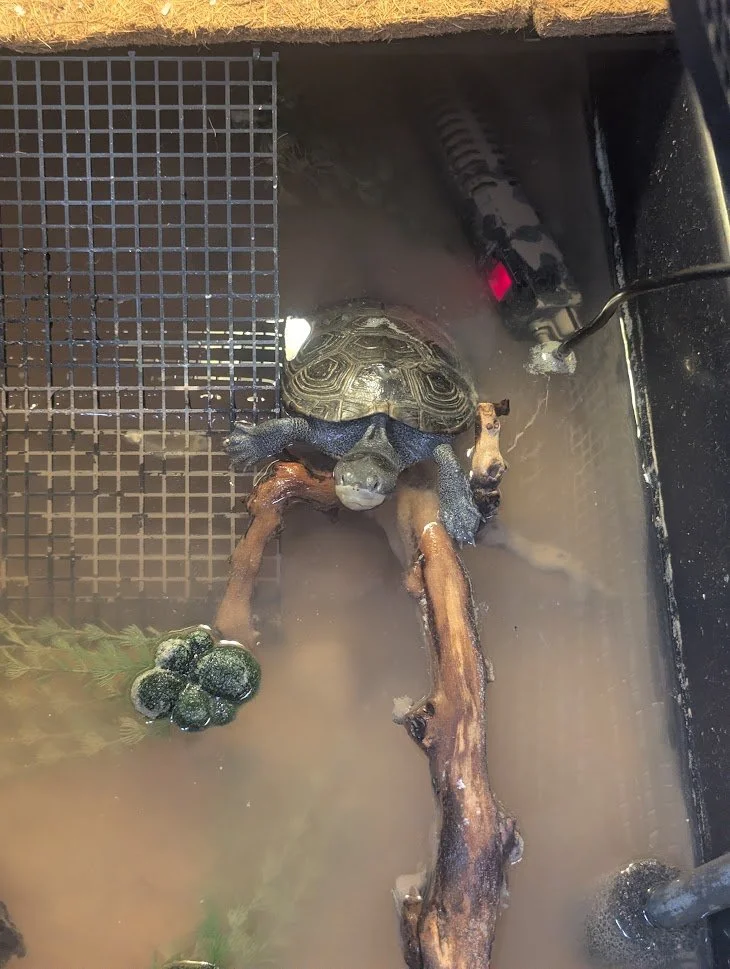
Meet Penn, Our Newest Wildlife Ambassador!

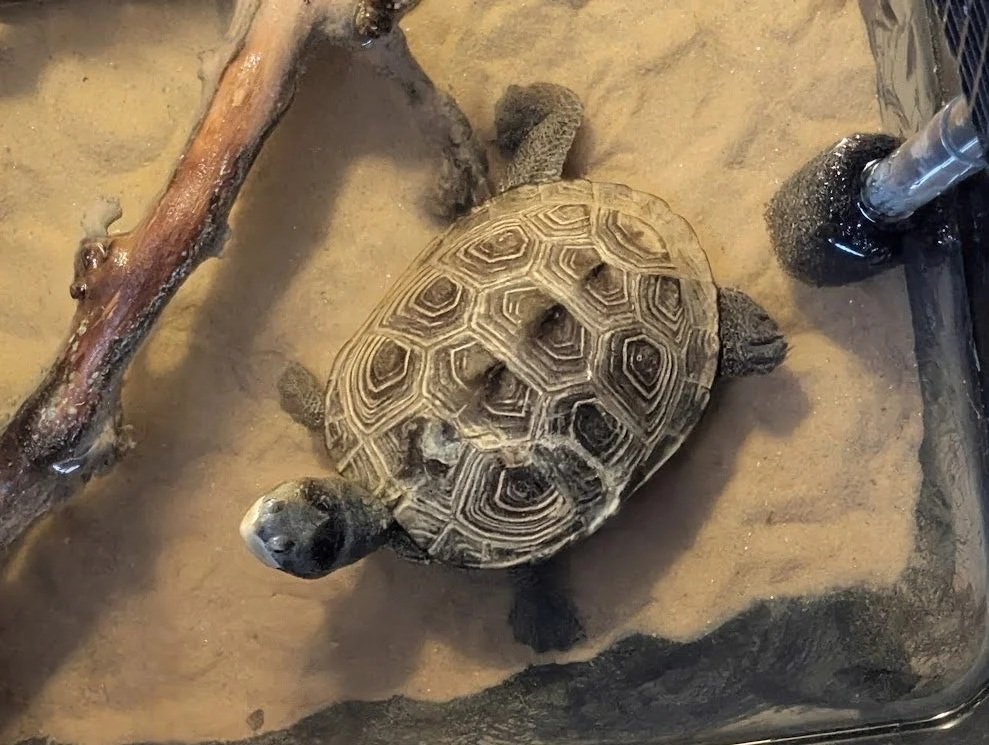
It’s always an exciting day when we welcome a new Wildlife Ambassador! Meet Penn, our newest Diamondback Terrapin (Malaclemys terrapin), who recently joined us from the NC State Turtle Rescue Team.

Penn was brought to the Turtle Rescue Team after being struck by a car, leaving him with a fractured shell and a traumatic brain injury. While his shell healed, his brain injury permanently impacted his ability to swim. Because he can't survive in the wild, Penn has found a new home at Piedmont Wildlife Center, where he has a specially designed shallow habitat that allows him to move through the water safely while receiving the care he needs.

If you've met our longtime resident Diamondback Terrapin, Terra, you'll notice Penn looks quite different! Terra is about twice Penn's size. Female Diamondback Terrapins grow much larger than males because their bodies need extra space to produce and carry eggs. Penn also has darker coloring than Terra because of natural genetic variation that makes every Terrapin unique. The "diamondback" in Diamondback Terrapin comes from the beautiful diamond-shaped patterns on the scutes, or scales, of their shells.

Diamondback Terrapins are the only turtles in North America that spend nearly their entire lives in brackish water (a mix of fresh and salt water) along the Atlantic and Gulf Coasts of the United States. Today, they face many threats including habitat loss, road mortality, crab traps, and climate change. Because of these challenges, they are listed as Vulnerable by the International Union for Conservation of Nature (IUCN) and are considered a Species of Greatest Conservation Need by the North Carolina Wildlife Resources Commission.

Penn may not be able to return to the wild, but he has an important new role as a Wildlife Ambassador. By meeting Penn, visitors can discover the amazing adaptations of Diamondback Terrapins and discover how simple actions, like watching for turtles crossing roads and protecting coastal wetlands, makes a big difference for wildlife.

SUPPORT PENN'S CARE WHEN YOU ADOPT AN AMBASSADOR

Parsley is Hopping into Retirement!

Parsley has been part of the Piedmont Wildlife Center family since 2013.

For more than a decade, Parsley has been one of our most beloved Animal Ambassadors—charming kids and adults alike with her gentle nature and sweet personality. Now, our Wildlife Education team has made the thoughtful decision to retire Parsley from participating in animal programs.

Thank you, Parsley, for all of the joy and learning opportunities you’ve brought to the Triangle and beyond! We’re excited to give you a peaceful, pampered retirement.

Pictured: Parsley at her retirement party.

Help Feed Our Ambassador Animals: Rising Food Costs and How You Can Support PWC

Our at-school animal programs and field trips give students the chance to connect with wildlife up-close. During the 2023-2024 school year, our Ambassador Animals visited over 270 classrooms and participated in more than 80 field trips, bringing hands-on wildlife education to students across the Triangle. As we continue to inspire the next generation of conservationists, rising food costs are making it harder to provide the specialized diets our animals need.

How You Can Help

We are reaching out to our local community for food and gift card donations to support our Ambassador Animals.

We are seeking donations of organic or pesticide-free produce and meat, or gift cards for the following stores: Harris Teeter, Food Lion, PetSmart, and Chewy. Below are some of the most useful food donations:

Organic or Pesticide-Free Fruits & Vegetables

Grapes | Strawberries | Blueberries | Apples | Cantaloupe | Honeydew | Mustard Greens | Turnip Greens | Collard Greens | Broccoli | Brussel Sprouts | Cucumbers | Zucchinis | Bell Peppers | Sweet Potatoes

Organic or Pesticide-Free Meat & Protein Sources

Eggs | Frozen Fish | Sardines (in water) | Whole Rabbits | Whole Quail

If you’d like to make a donation or have questions about what’s needed, please email conservation@piedmontwildlifecenter.org.

3 Ways to Support PWC this Valentine's Day

This Valentine's Day, Pumpkin the opossum invites you to celebrate your love for wildlife, conservation, and outdoor education by supporting Piedmont Wildlife Center. Whether you're head-over-heels for romance or would rather say "not today, Cupid," you can make a big difference this month - while having a blast learning about native NC wildlife!


Keep scrolling for 3 easy (and fun!) ways to support nature connection at PWC this Valentine's Day. Thank you for sharing your love for nature with us!


1. Enter our Valentine's Day raffle for a chance to win a pet portrait, animal encounters, and more!

$625 down, $3375 to go! Help us reach our goal of $4,000 before 11:59 PM EST on February 15th by joining Love at First Flight, an online raffle for Piedmont Wildlife Center. You can purchase entries on our RallyUp raffle page for a chance to win the prize(s) of your choice:

  • One Week of Summer Camp at PWC

  • A Custom Oil Painting of Your Pet

  • A Private Raptor Tour

  • An Opossum Squishmallow Plush

  • A Private Turtle Trek

  • Two $50 Apple Gift Cards

  • A Private Animal Encounter

Tickets start at $10 for 10 entries. The more you buy, the more you save - and the better your chances of winning your favorite prize! Winners will be drawn on Friday, February 16th.

Void where prohibited. Piedmont Wildlife Center is an IRS-designated 501(c)3 nonprofit organization. Proceeds from this raffle will support the care of our Ambassador Animals, provide camp scholarships to kids in need, and help sustain our award-winning environmental education programs.


2. Surprise your sweetheart with a personalized video from one of our Ambassador Animals...

Celebrate your sweetie's love of wildlife by gifting them an Ambassador Animal sponsorship! Our Valentine's Day "adoption" packages include a personalized video and virtual Valentine's Day card from Pumpkin the opossum, Shelly the box turtle, Wink the red-tailed hawk, or Parsley the rabbit. Your loved one will also receive an adoption certificate and an information packet about your chosen Ambassador.

This $30 sponsorship package makes a great Valentine's Day gift for the nature lover in your life, whether they live nearby or across the globe!

Please note: Packages must be ordered by noon on Monday, February 12th in order to be received by Valentine’s Day. Any order placed after noon on Monday, February 12th will be delivered by February 23rd.


3. ...or unleash your petty side by feeding our Ambassador Animals a rat, worm, or veggie in "honor" of your ex!

Not feeling the love this Valentine's Day? We get it. Put your spite to work for a good cause with a "Petty Pals" Ambassador Animal sponsorship!

Your $30 sponsorship will feed Pumpkin the opossum or Wink the red-tailed hawk a tasty rodent in honor of the "rat" in your life. Feeling a little more earthy? You can also opt to sponsor a superworm for Shelly the box turtle, or a veggie snack for Parsley the rabbit! Whatever option you choose, you'll receive a personalized video of your Ambassador Animal eating their snack, plus a virtual Valentine's Day card, an information packet, and an "adoption" certificate.

Please note: Packages must be ordered by noon on Monday, February 12th in order to be received by Valentine’s Day. Any order placed after noon on Monday, February 12th will be delivered by February 23rd.