
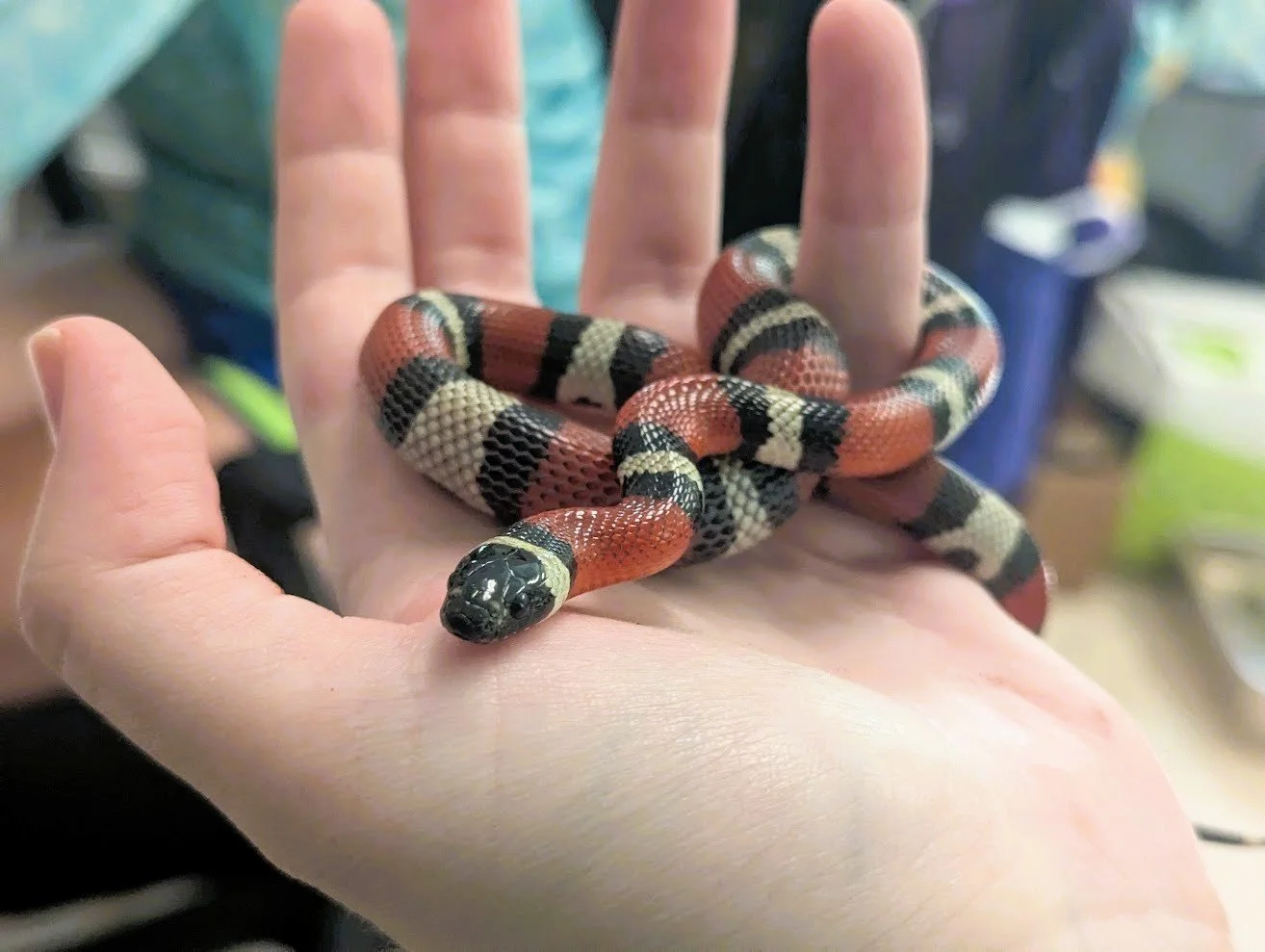
We're excited to welcome another friend to Piedmont Wildlife Center! Twizzler, our Coastal Plains Milksnake, joins us after being unable to find a home at a local pet store. While he is still very small, Twizzler has a big personality! He is full of energy and loves exploring his enclosure as he settles into his new home.
Twizzler is one of six Snake Ambassadors, including Izzy, our Eastern Milksnake. Although they're both milksnakes, they look quite different. Izzy has tan and brown markings with more muted colors, while Twizzler has bright red, black, and white bands. Both snakes are on the smaller side, with most milksnakes growing to be only 14 to 36 inches long.
Milksnakes have one of the widest ranges of any snake species in North America. They can be found from southern Canada all the way to Venezuela! There are as many as 24 milksnake subspecies, each living in a variety of habitats and sporting their own unique colors and patterns.
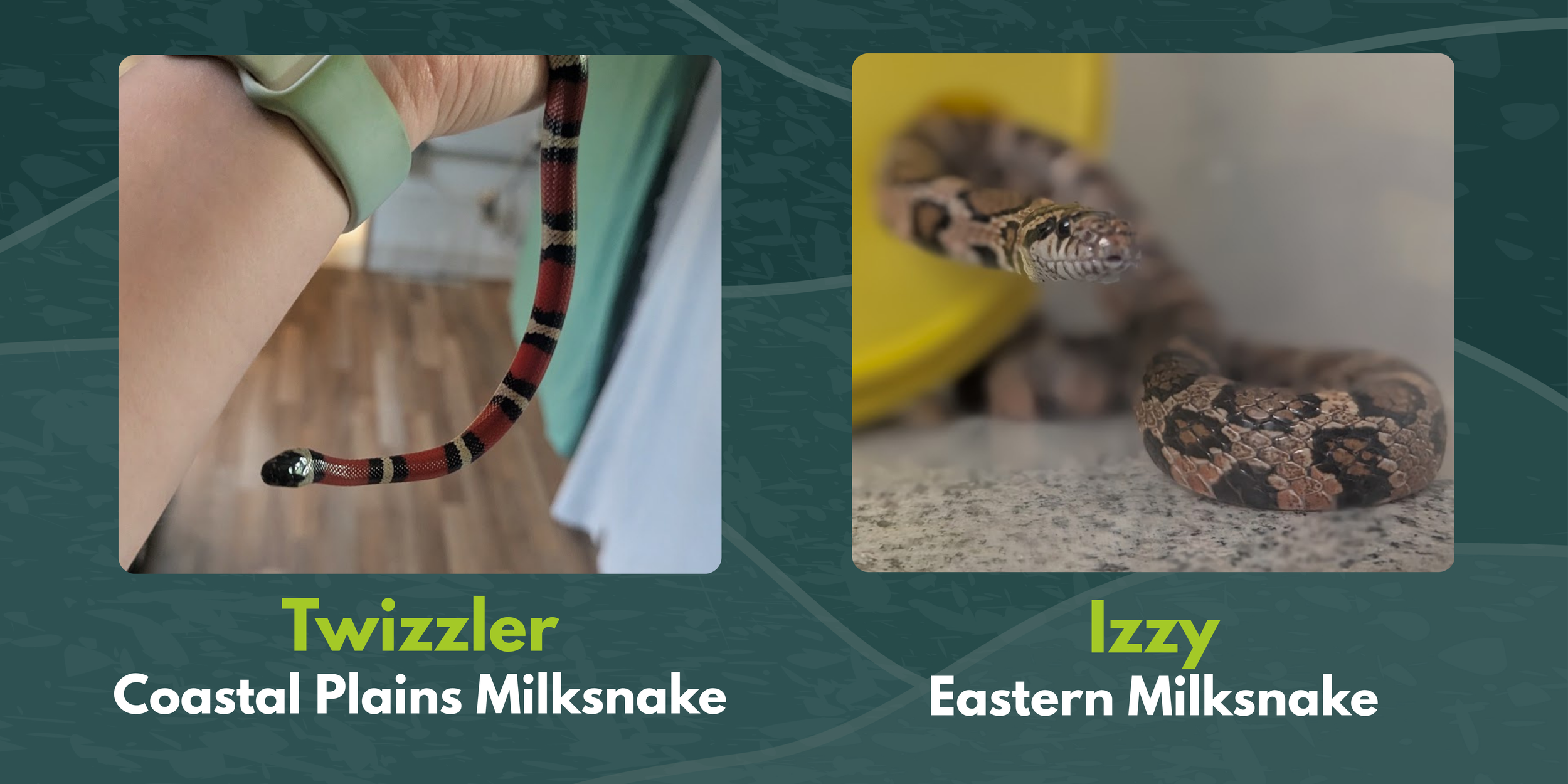
Speaking of, Twizzler's bright colors aren't just beautiful—they also keep him safe! Coastal Plains Milksnakes have bold red, black, and white bands that resemble the venomous Eastern Coral Snake. This is an example of mimicry, where one harmless animal resembles a dangerous one to scare away predators. You may have heard the rhyme, "Red touching black, friend of Jack. Red touching yellow can kill a fellow." While this rhyme can sometimes help identify snakes in parts of the southeastern United States, it isn't reliable everywhere. The safest thing to do is always admire wild snakes from a distance and never try to handle them.
Like all snakes, Twizzler uses his forked tongue to "smell" the world around him. Every time he flicks his tongue, he collects tiny scent particles from the air and ground. He then brings those scents to a special organ in the roof of his mouth, helping him find food and learn about his surroundings. If you meet him, you may even catch him flicking his tongue as he explores!
Despite being a milksnake, Twizzler doesn't drink milk! The name "milksnake" comes from an old wives' tale that these snakes sneak into barns at night to steal milk from cows. In reality, milksnakes visit barns because they're looking for prey like mice and rats. As carnivores and non-venomous constrictors, they help keep rodent populations under control. Here at Piedmont Wildlife Center, Twizzler enjoys a diet of small mice.
We are so excited to welcome Twizzler to his new home! We can't wait for you to meet our colorful new ambassador and discover why snakes like Twizzler are such an important part of healthy ecosystems.